Palo Alto PAN-OS Firewall Vulnerability Let Attackers Reboot Firewall by Sending Malicious Packet



Palo Alto Networks has disclosed a critical denial-of-service vulnerability in its PAN-OS firewall software that allows unauthenticated attackers to remotely reboot firewalls by sending specially crafted packets.
Tracked as CVE-2025-4619, the vulnerability poses significant risks to organizations relying on Palo Alto firewalls for network security.
The flaw, identified as CWE-754 (Improper Check for Unusual or Exceptional Conditions), exists in the PAN-OS software dataplane.
Attackers can exploit this vulnerability without authentication, credentials, or user interaction. When successful, the malicious packet triggers an unexpected reboot of the firewall.
More concerning, repeated exploitation attempts can force the firewall into maintenance mode. Severely interrupting network operations and potentially leaving organizations exposed to threats during downtime.

Palo Alto Networks assigned the vulnerability a CVSS 4.0 score of 6.6, rating it as MEDIUM severity with MODERATE urgency.
However, the CVSS-B score reaches 8.7, reflecting the potential business impact. The attack vector is network-based and low-complexity.
The vulnerability directly affects product availability, highlighting its potential to interrupt critical network infrastructure.
PA-Series, VM-Series, and Prisma Access Deployments
The vulnerability affects PA-Series firewalls, VM-Series firewalls, and Prisma Access deployments that are running vulnerable versions of PAN-OS. Cloud NGFW is not impacted.
Vulnerable versions include PAN-OS 10.2 (through 10.2.13), 11.1 (through 11.1.6), and 11.2 (through 11.2.4). PAN-OS 12.1 and 10.1 are unaffected.
Importantly, exploitation requires a specific configuration: the firewall must have a URL proxy or a decrypt policy enabled; even with explicit no-decrypt policies, the vulnerability may be exploitable.
Palo Alto Networks recommends upgrading to patched versions. For PAN-OS 11.2. Organizations should update to 11.2.5 or later.
For 11.1, upgrade to 11.1.7. PAN-OS 10.2 users should patch to 10.2.14 or apply the appropriate urgency, depending on their current version. The company reports that no known workarounds currently exist.
Currently, Palo Alto Networks has not identified any active malicious exploitation of this vulnerability. Administrators should prioritize patching given the ease of exploitation and potential operational impact.

Researchers Uncovered New Lazarus and Kimsuky Infrastructure with Active Tools and Tunnelling Nodes
19 Dec 2025A joint investigation by Threat Research has exposed an extensive network of North Korean state-sponsored infrastructure, revealing fresh connections between Lazarus and Kimsuky operations across global campaigns.
Read More
Windows PowerShell 0-Day Vulnerability Let Attackers Execute Malicious Code
10 Dec 2025Security update addressing a dangerous Windows PowerShell vulnerability that allows attackers to execute malicious code on affected systems.
Read More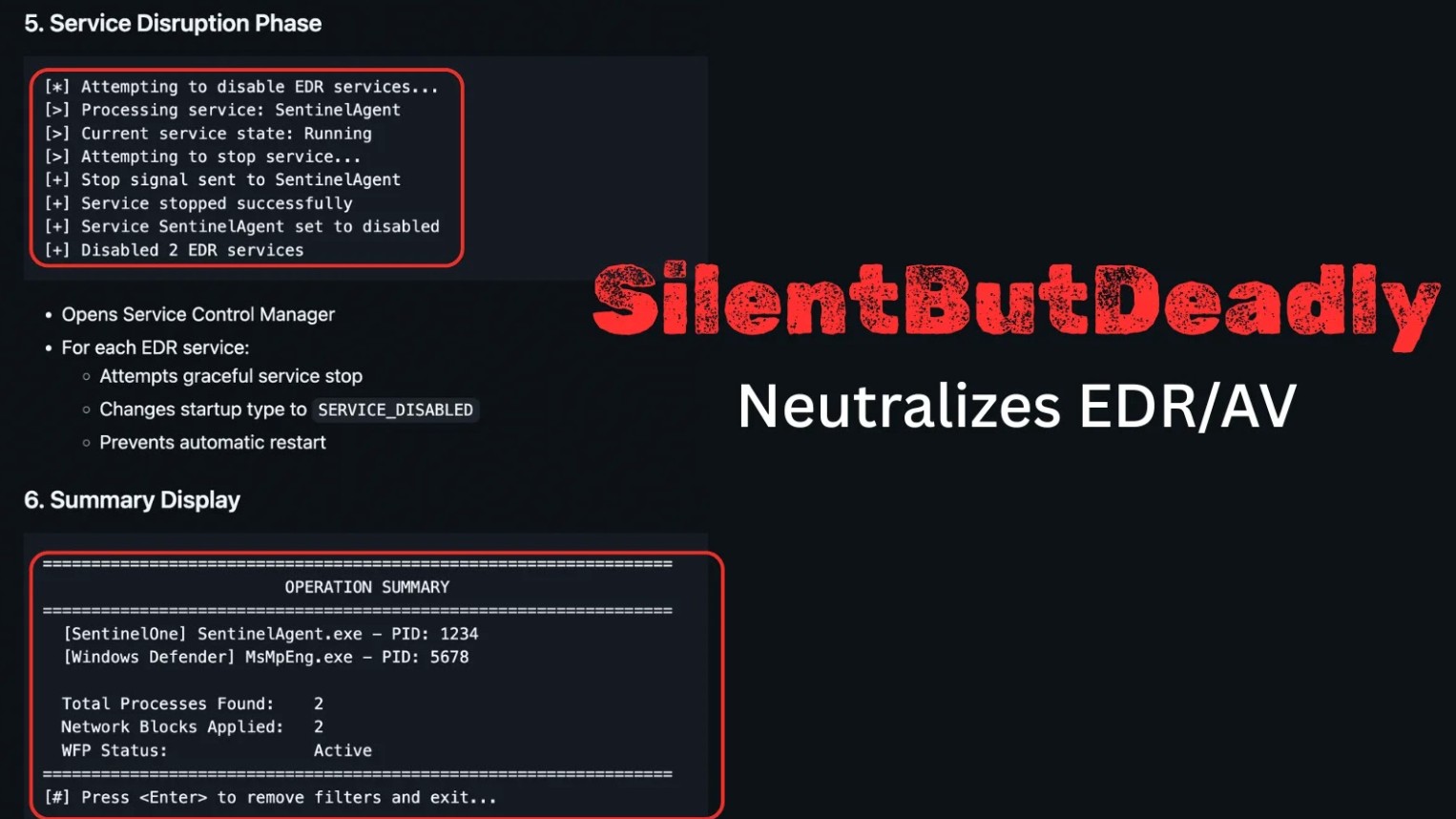
SilentButDeadly – Network Communication Blocker Tool That Neutralizes EDR/AV
17 Nov 2025A new open-source tool called SilentButDeadly has emerged, designed to disrupt Endpoint Detection and Response (EDR) and antivirus (AV) software by severing their network communications.
Read More